Featured

Welcome to My New Photography Blog

what is photography

What is photography?” or “what is a photograph?”; you will surely think that answers to these questions are pretty obvious. Everyone knows what is a photograph! Simply put, photography is the art or act of taking photographs. The device that is used to take photos is called a camera. Photographs are the visual records created by the impressions of light on a variety of light-sensitive surfaces. Literally also, the word photograph means “drawing with light”. The word photograph is made of two Greek words; photo means light and graph means drawing (or record).

Photography, as we see it today, was invented in nineteenth century. And last couple of centuries, the art and science of photography has developed by leaps and bounds. The modern photography is an important medium of conserving information for the coming generations. It is a very common method of communication and expression. Therefore, no surprise that photography has developed into a well-established form of art as well.

ISO

Exposure Summary

Once you’ve understood aperture, shutter speed and ISO, you need to learn how each of these elements of exposure work together.

For all those basics of photography, exposure is the most important.

If you don’t have this down, composition and framing become a moot point in beginner photography.

In this post, you will learn about the ‘stop’ based system for measuring exposure. But, more importantly, how to prioritize the aperture, shutter speed, and ISO for the best photo.

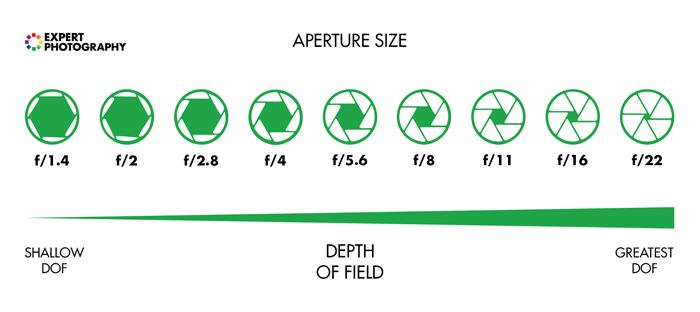
Depth of Field

When you’re shooting in low light, you invariably have to widen your aperture to allow enough light into the lens. But this has one rather a major side effect. A shallow depth of field.

This can be used very creatively (often to excess) but it’s not the only possibility. There are many situations, such as landscapes, where you’ll want to be using a narrower aperture so that the whole scene remains in focus.

This tutorial walks you through everything you need to know about choosing the right aperture (and therefore the depth of field) for the right situation.

When it comes to covering all of the basics of photography, depth of field is very important

White Balance

White balance is something I wish I’d learned more about much sooner than I did. I look back on some photos now and wonder what I was thinking.

The white balance changes the color cast of the entire photo. It is responsible for the overall warmth. It can determine whether your photo appears blue or orange, cold or warm.

Auto white balance doesn’t tend to do a particularly good job, particularly with tungsten light. The sooner you learn about this basic photography idea, the more accurate your photos will look.

Focal Length

Have you ever wondered what the ‘mm’ on your lens actually means? Or why people use longer focal lengths for portraits?

It’s all discussed in this tutorial. The focal length affects more than just the ‘zoom’. It also influences the perspective.

I cover which focal length you would want to use in different situations. As well as their possible side effects.

It’s a really worthy read and one of my favorite tutorials to date.
Aperture

Exposure happens in three steps. We will start with the aperture. This is the hole inside the lens, through which the light passes.

It’s similar to the pupil of your eye: the wider the aperture, the more light is allowed in and vice versa. Simple? Not quite.

As the aperture widens, the f/number gets lower and more light is allowed into the camera. This is great for low light but be aware that it’s going to make the depth of field very shallow – not ideal when taking landscapes.

So there’s a bit of give and take and I go into full detail about that in this post. The aperture is the preferred setting to set first, as it directly influences how much of your scene is in focus. But, if you are looking to create motion blur, then it is second to the shutter speed.

Exposure will be much easier if you can memorize the f/stop scale.

Photography for Beginners: A Complete Guide

Cameras are complicated. I was frustrated with my first DSLR. I just couldn’t capture what I saw through my viewfinder. It took a ton of trial and error.

When I managed to work it all out, I started taking some pretty spectacular images. In this post, I will share with you everything that I’ve learned from my mistakes

Infographic

As beginner photographers, we tend to be visual learners. And it’s my job to make beginning photography as easy as possible for you.

So I thought to myself, “What better way to help beginner photographers learn how to use their cameras, than by creating an infographic?” And that’s exactly what I did.

I collaborated with an illustrator friend of mine, and together we made these images. The following are something that will make understanding exposure, and how cameras work, a whole lot easier!

Exposure

For those beginning photography, exposure is key to capturing a great image.

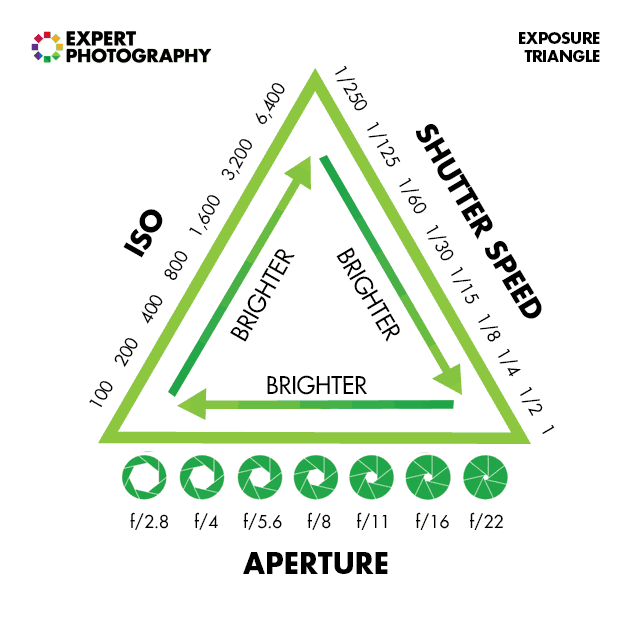
Learning how exposure works will help you to take control of your camera and take better photos. Apertureshutter speedISO are the elements that combine to create an exposure.

As you’ll soon learn, these elements have an effect on more than just the exposure. They also cause alterations in depth of fieldmotion blur, and digital noise.

Once you understand how each one works, you can start diving into manual mode. This is where you take control back from your camera.

The exposure triangle is a great way to remember the three settings. When combined, they control the amount of light captured from any given scene.

This will help you to understand that changing one setting will necessitate a change in the others. That is if you are photographing the same scene with the same exact lighting conditions.

Design a site like this with WordPress.com
Get started